Human rights discourse encompasses legal, philosophical, and ethical considerations that examine the fundamental entitlements of individuals. The central question concerns the origin and nature of these rights: whether they derive from inherent human dignity, religious or natural law principles, or social and political agreements. This foundational debate influences policy development, legal frameworks, and international relations.
Contemporary human rights theory draws from multiple sources, including secular philosophical traditions and religious teachings. These perspectives offer different explanations for why humans possess certain inalienable rights and how societies should protect them. The tension between viewing rights as intrinsic to human nature versus viewing them as products of social contracts shapes legislative approaches, judicial interpretations, and international human rights instruments.
This analysis examines human rights through two primary lenses: rights understood as inherent to human nature or divine endowment, and rights established through governmental and institutional frameworks. Understanding both approaches provides insight into how different societies conceptualize human dignity and structure their legal and political systems to protect individual freedoms.
Key Takeaways
- Human rights are debated as either inherent from God or granted by governments.
- The God-given perspective views rights as universal and inalienable.
- The government-granted perspective sees rights as dependent on legal and political systems.
- Historical and cultural contexts shape how human rights are understood and applied.
- Finding common ground is essential for effective protection and promotion of human rights globally.
The Concept of Human Rights
Human rights are often described as the fundamental entitlements that every individual possesses by virtue of being human. These rights encompass a wide range of freedoms and protections, including the right to life, liberty, and security, as well as the right to education, work, and participation in cultural life. The Universal Declaration of Human Rights, adopted by the United Nations in 1948, serves as a cornerstone document that articulates these rights on a global scale.
However, the interpretation and application of these rights can vary significantly across different cultures and legal systems. At its essence, the concept of human rights is grounded in the belief that all individuals are entitled to dignity and respect. This belief transcends geographical boundaries and cultural differences, suggesting a universal standard for human treatment.
Yet, the challenge arises when we consider how these rights are upheld or violated in practice. In many societies, systemic inequalities and injustices persist, raising questions about the effectiveness of existing frameworks for protecting human rights. Thus, while the concept is noble in theory, its implementation often reveals deep-seated tensions that require careful examination.
God-Given Perspective

From a Christian perspective, human rights can be understood as divinely ordained entitlements that reflect the inherent dignity bestowed upon each person by God. This view posits that every individual is created in the image of God (imago Dei), which serves as the foundation for recognizing their worth and value. In this light, human rights are not merely social constructs but are rooted in a moral order established by a higher power.
This perspective emphasizes that our rights are not granted by governments or institutions but are intrinsic to our very existence as human beings. The implications of this God-given perspective are profound. It calls for a society that prioritizes compassion, justice, and love for one’s neighbor.
When individuals recognize that their rights are derived from their Creator, it fosters a sense of responsibility toward others. This understanding encourages people to advocate for those whose rights are being violated and to work towards reconciliation in situations of conflict. Moreover, it challenges us to reflect on how our actions align with the moral imperatives set forth in Scripture, urging us to create a society that embodies these values.
Government-Granted Perspective
In contrast to the God-given perspective, the government-granted view posits that human rights are established through legal frameworks and societal agreements. This perspective emphasizes the role of governments in recognizing and protecting individual rights through legislation and policy. The social contract theory, popularized by philosophers such as John Locke and Jean-Jacques Rousseau, suggests that individuals consent to surrender certain freedoms in exchange for protection and order provided by the state.
In this context, human rights become contingent upon the laws and norms established by society. While this perspective has its merits—particularly in promoting accountability and governance—it also raises critical questions about the universality of rights. If rights are granted by governments, what happens when those governments fail to uphold them?
The potential for abuse and oppression becomes evident when power dynamics shift or when leaders prioritize their interests over the welfare of their citizens. Thus, while government-granted rights can provide a framework for justice, they must be continually scrutinized to ensure they align with a higher moral standard that transcends political agendas.
Historical and Cultural Influences
The historical evolution of human rights has been shaped by various cultural influences that reflect the complexities of human society. From ancient civilizations to modern democracies, different cultures have contributed to our understanding of rights and justice. For instance, the Magna Carta of 1215 laid foundational principles for individual liberties in England, while Enlightenment thinkers championed ideas of equality and freedom that would later influence global human rights movements.
Cultural contexts also play a significant role in shaping perceptions of human rights. In some societies, communal values may take precedence over individual rights, leading to differing interpretations of what constitutes justice and dignity. For example, collectivist cultures may prioritize social harmony over personal freedoms, resulting in tensions when universal human rights are imposed without consideration for local customs and traditions.
Understanding these historical and cultural influences is crucial for fostering dialogue and reconciliation among diverse communities.
Implications for Society
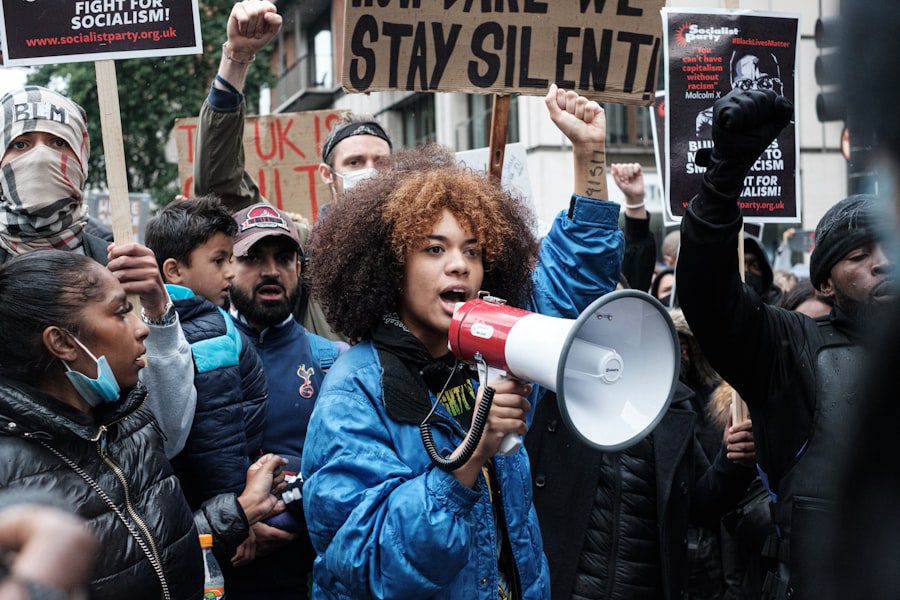
The implications of how we understand human rights extend far beyond legal frameworks; they permeate every aspect of society. A society that embraces a God-given perspective on human rights is likely to prioritize compassion, empathy, and social responsibility. Such a society recognizes that every individual has inherent worth and deserves respect regardless of their background or beliefs.
This understanding can lead to initiatives aimed at addressing systemic injustices and promoting social equity. Conversely, a society that relies solely on government-granted perspectives may risk becoming complacent in its pursuit of justice. When rights are viewed as privileges bestowed by authorities rather than inherent entitlements, individuals may feel disempowered to advocate for themselves or others.
This dynamic can perpetuate cycles of oppression and inequality, undermining the very fabric of community life. Therefore, it is essential for societies to cultivate an environment where both perspectives can coexist harmoniously, fostering an atmosphere conducive to human flourishing.
Legal and Political Ramifications
The legal and political ramifications of differing perspectives on human rights are significant. In nations where human rights are enshrined in law but lack enforcement mechanisms, citizens may find themselves vulnerable to violations without recourse. Conversely, countries with strong legal protections may still struggle with cultural attitudes that undermine these rights at a grassroots level.
The challenge lies in bridging the gap between legal frameworks and societal attitudes to ensure that human rights are not only recognized but actively upheld. Moreover, international relations are often influenced by differing interpretations of human rights. Countries may engage in diplomatic negotiations based on their respective views on what constitutes justice and dignity.
This can lead to tensions when one nation perceives another as violating fundamental rights or failing to uphold international agreements. As such, fostering dialogue between nations with varying perspectives is crucial for promoting global cooperation and understanding.
Finding Common Ground
In light of these complexities, finding common ground between differing perspectives on human rights is essential for fostering reconciliation in society. One approach is to emphasize shared values that transcend cultural and religious boundaries—values such as dignity, respect, and justice for all individuals. By focusing on these commonalities, we can create spaces for dialogue where diverse voices can be heard and respected.
Additionally, collaborative efforts between religious organizations, civil society groups, and governmental bodies can pave the way for more comprehensive approaches to human rights advocacy. By working together towards shared goals—such as combating poverty, promoting education, or addressing climate change—we can build bridges between differing perspectives while advancing the cause of human flourishing. Ultimately, the journey toward a wise and moral society requires humility, empathy, and a commitment to understanding one another’s perspectives.
As we engage in this vital conversation about human rights, let us strive to create a world where every individual is valued and empowered to live with dignity—reflecting the divine image in which we were all created.