The phrase “survival of the fittest,” often attributed to Charles Darwin, has permeated various aspects of human thought and behavior, extending far beyond its biological origins. In the context of human society, it suggests that those who are most capable—whether through intelligence, strength, or resourcefulness—will thrive while others will falter. This notion has been used to justify a range of social policies and attitudes, from laissez-faire capitalism to eugenics, and has often been misinterpreted as a callous endorsement of competition over cooperation.
As we navigate the complexities of modern life, it is crucial to examine how this concept shapes our understanding of success, community, and moral responsibility. In a world increasingly defined by rapid technological advancements and global interconnectedness, the implications of “survival of the fittest” resonate deeply. It raises questions about the nature of human relationships and the values we prioritize.
Are we merely individuals competing for limited resources, or are we part of a larger tapestry that thrives on mutual support and shared goals? This article seeks to explore the historical roots of this concept, its ethical implications, and the potential for fostering a more compassionate society that values human flourishing over mere survival.
Key Takeaways
- “Survival of the fittest” originates from evolutionary theory but has complex implications when applied to human society.
- Historically, the concept has influenced social policies, often justifying inequality and competition.
- Ethical concerns arise when “survival of the fittest” is used to marginalize vulnerable groups.
- Empathy and compassion are crucial to balance competitive instincts and promote social cohesion.
- Embracing alternatives to this mindset can help build a more equitable and inclusive society.
The historical roots of the “survival of the fittest” concept and its impact on society
The origins of “survival of the fittest” can be traced back to the late 19th century, when Darwin’s theory of evolution began to gain traction. While Darwin himself did not coin the phrase, it was popularized by philosopher Herbert Spencer, who applied it to social theory. Spencer’s ideas contributed to the development of Social Darwinism, a movement that sought to explain social hierarchies through a lens of natural selection.
This perspective posited that societal progress was a result of the “fittest” individuals rising to prominence while others fell by the wayside. The impact of this ideology on society has been profound and often detrimental. It has been used to rationalize imperialism, colonialism, and systemic inequalities, suggesting that certain races or classes were inherently superior.
This misapplication of Darwinian principles has led to policies that prioritize competition over collaboration, fostering environments where empathy is often overshadowed by self-interest. The historical consequences are evident in the social structures that persist today, where disparities in wealth and opportunity continue to define the lived experiences of many.
The ethical implications of applying “survival of the fittest” to human society
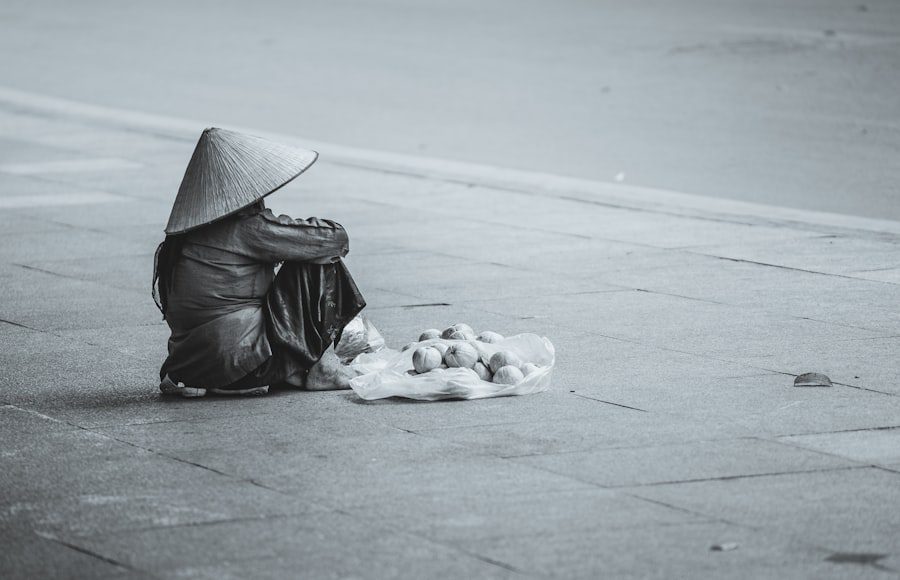
The ethical ramifications of adopting a “survival of the fittest” mentality are significant and troubling. When we view human interactions through this lens, we risk dehumanizing those who struggle or fail to meet arbitrary standards of success. This perspective can lead to a lack of compassion for those facing adversity, as it frames their challenges as personal failures rather than systemic issues that require collective action.
Such an outlook not only undermines our moral obligations to one another but also erodes the very fabric of community. Moreover, this mindset can perpetuate cycles of poverty and inequality. By prioritizing individual achievement over communal well-being, we neglect the structural barriers that hinder many from realizing their potential.
The belief that only the “strongest” deserve support can create an environment where marginalized groups are further disenfranchised. In contrast, a more ethical approach would recognize our shared humanity and advocate for systems that uplift all individuals, fostering an environment where everyone has the opportunity to thrive.
The role of empathy and compassion in a society that values “survival of the fittest”
Empathy and compassion are essential counterbalances to the harsh realities implied by “survival of the fittest.” In a society that prioritizes competition, these virtues can serve as powerful reminders of our interconnectedness. When we cultivate empathy, we begin to understand that each person’s struggles are influenced by a myriad of factors beyond their control—such as socioeconomic status, education, and health. Recognizing this complexity allows us to approach one another with kindness rather than judgment.
Compassionate societies are built on the understanding that human flourishing is not solely an individual endeavor but a collective one. When we extend our hands to help those in need, we create a culture that values cooperation over competition. This shift in perspective can lead to innovative solutions for societal challenges, as diverse voices come together to address issues like poverty, education, and healthcare.
By fostering empathy and compassion, we can create a more just society where every individual is empowered to contribute their unique gifts.
The impact of socioeconomic inequality on the idea of “survival of the fittest”
Socioeconomic inequality plays a critical role in shaping perceptions of “survival of the fittest.” In societies marked by stark disparities in wealth and opportunity, the notion that success is solely a product of individual merit becomes increasingly problematic. Structural barriers—such as inadequate access to education, healthcare disparities, and systemic discrimination—create an uneven playing field where not everyone has an equal chance to succeed. This reality challenges the validity of applying Darwinian principles to human society.
When socioeconomic inequality is prevalent, those at the bottom often find themselves trapped in cycles of disadvantage that are difficult to escape. The idea that they simply lack the necessary qualities to thrive can lead to victim-blaming and further marginalization. Instead of recognizing these systemic issues as obstacles requiring collective action, society may perpetuate harmful narratives that reinforce existing hierarchies.
Addressing these inequalities requires a commitment to social justice and an understanding that true progress is achieved when all members of society are given equitable opportunities.
The potential consequences of embracing “survival of the fittest” in human society

Embracing a “survival of the fittest” mentality can have dire consequences for social cohesion and moral integrity. When competition is prioritized above all else, individuals may become increasingly isolated and distrustful of one another. This erosion of community can lead to heightened levels of anxiety and depression as people feel pressured to constantly prove their worth in a cutthroat environment.
The relentless pursuit of success can also foster unethical behavior, as individuals may resort to manipulation or deceit in order to get ahead. Furthermore, this mindset can stifle innovation and creativity. When individuals are pitted against one another in a zero-sum game, collaboration becomes less likely.
The most groundbreaking ideas often emerge from diverse teams working together toward common goals rather than from isolated individuals striving for personal gain. By embracing a more cooperative approach rooted in empathy and shared purpose, we can unlock new possibilities for growth and progress.
Alternatives to the “survival of the fittest” mindset in shaping a more equitable society
To foster a more equitable society, we must seek alternatives to the “survival of the fittest” mindset that prioritize collaboration over competition. One such alternative is the concept of mutual aid—a practice rooted in solidarity where individuals come together to support one another in times of need. By recognizing our interdependence and actively working to uplift those around us, we can create communities that thrive on shared resources and collective strength.
Additionally, promoting policies that address systemic inequalities is essential for creating a more just society. This includes advocating for equitable access to education, healthcare, and economic opportunities for all individuals. By dismantling barriers that prevent marginalized groups from succeeding, we can cultivate an environment where everyone has the chance to flourish.
Emphasizing social responsibility and community engagement can also help shift societal values toward compassion and cooperation.
Reimagining the concept of “survival of the fittest” in the context of human society
In reimagining the concept of “survival of the fittest,” we must move away from a narrow interpretation focused solely on competition and individualism. Instead, we should embrace a vision that recognizes our shared humanity and interconnectedness. By prioritizing empathy, compassion, and social justice, we can create a society where every individual has the opportunity to thrive—not just survive.
As we navigate an increasingly complex world, let us strive for a paradigm shift that values collaboration over competition and recognizes that true success lies in uplifting one another. By fostering environments where everyone is empowered to contribute their unique gifts, we can build a wiser and more moral society—one that reflects our highest ideals and aspirations for human flourishing.