
The Liberty Proclamation is a historical document that addresses fundamental concepts of individual rights and human dignity. The document articulates principles related to personal freedoms and establishes a framework for understanding civil liberties within society. It has been referenced in discussions about governance, legal systems, and social policy throughout its existence.
The proclamation outlines specific rights that are considered fundamental to human existence. These rights are presented as inherent characteristics of humanity rather than privileges granted by governmental or institutional authorities. The document provides a foundation for examining the relationship between individual citizens and governing bodies, establishing parameters for the protection of personal freedoms.
The historical significance of the Liberty Proclamation lies in its influence on subsequent legal and political developments. It has served as a reference point for constitutional frameworks, judicial decisions, and legislative processes in various jurisdictions. The document’s principles have been incorporated into legal systems and have informed debates about the scope and limitations of governmental authority in relation to individual rights.
Key Takeaways
- The Liberty Proclamation is a significant declaration emphasizing individual freedom and rights.
- It emerged from a historical context marked by struggles for personal and political liberties.
- Upholding individual liberty is crucial for a just and equitable society.
- The proclamation has influenced societal structures and government responsibilities regarding freedom.
- Ongoing challenges and opposition highlight the need for continued advocacy and action to protect liberty.
Historical Context of the Liberty Proclamation
To fully appreciate the significance of the Liberty Proclamation, one must understand the historical backdrop against which it emerged. The proclamation arose during a tumultuous period marked by social upheaval, political strife, and a growing awareness of human rights. In many parts of the world, individuals were subjected to tyranny, discrimination, and systemic injustice.
The struggle for liberty was not merely an abstract concept; it was a lived reality for countless individuals who yearned for freedom from oppression. The proclamation was influenced by various philosophical movements that championed individual rights and questioned the legitimacy of authoritarian rule. Enlightenment thinkers such as John Locke and Jean-Jacques Rousseau laid the groundwork for modern democratic ideals, emphasizing the importance of consent, governance by the people, and the protection of individual liberties.
Their ideas resonated deeply with those who sought to challenge oppressive regimes and advocate for a society built on justice and equality. The Liberty Proclamation emerged as a culmination of these philosophical currents, seeking to articulate a vision of a society where liberty is not just an ideal but a lived experience.
The Importance of Individual Liberty

Individual liberty is foundational to human flourishing and societal progress. It empowers individuals to pursue their passions, express their beliefs, and engage in meaningful relationships with others. When people are free to make choices about their lives, they are more likely to contribute positively to their communities and society at large.
The importance of individual liberty extends beyond mere personal freedom; it fosters creativity, innovation, and resilience. Moreover, individual liberty is intricately linked to moral responsibility. When individuals are granted the freedom to make choices, they also bear the responsibility for those choices.
This dynamic encourages ethical behavior and cultivates a sense of accountability within society. A community that values individual liberty is one that recognizes the inherent worth of each person and promotes an environment where everyone can thrive. In this way, individual liberty becomes not just a personal right but a collective good that enhances the fabric of society.
The Impact of the Liberty Proclamation on Society
The Liberty Proclamation has had far-reaching effects on societies around the globe. Its principles have inspired movements for civil rights, social justice, and democratic governance. By articulating a vision of liberty that transcends borders and cultures, the proclamation has galvanized individuals and groups to advocate for their rights and challenge oppressive systems.
It has served as a rallying point for those who believe in the power of collective action to effect change. In many instances, the proclamation has led to tangible improvements in societal conditions. It has spurred legislative reforms aimed at protecting individual rights and dismantling discriminatory practices.
The ripple effects of its ideals can be seen in various social movements that have sought to address issues such as racial inequality, gender discrimination, and economic injustice. By fostering a culture of advocacy and activism, the Liberty Proclamation has empowered individuals to stand up against injustice and work toward a more equitable society.
The Role of Government in Upholding Liberty
The role of government in upholding liberty is both crucial and complex. Governments are tasked with creating an environment where individual rights are protected and respected. This responsibility requires a delicate balance between maintaining order and safeguarding personal freedoms.
A government that prioritizes liberty must be vigilant against encroachments on individual rights, whether from state actors or private entities. Moreover, governments must actively promote conditions that enable individuals to exercise their liberties fully. This includes ensuring access to education, healthcare, and economic opportunities that empower citizens to thrive.
A government committed to upholding liberty recognizes that true freedom cannot exist in a vacuum; it must be supported by structures that facilitate human flourishing. In this sense, the role of government extends beyond mere regulation; it encompasses fostering an environment where individuals can pursue their aspirations without fear of oppression or discrimination.
Opposition to the Liberty Proclamation
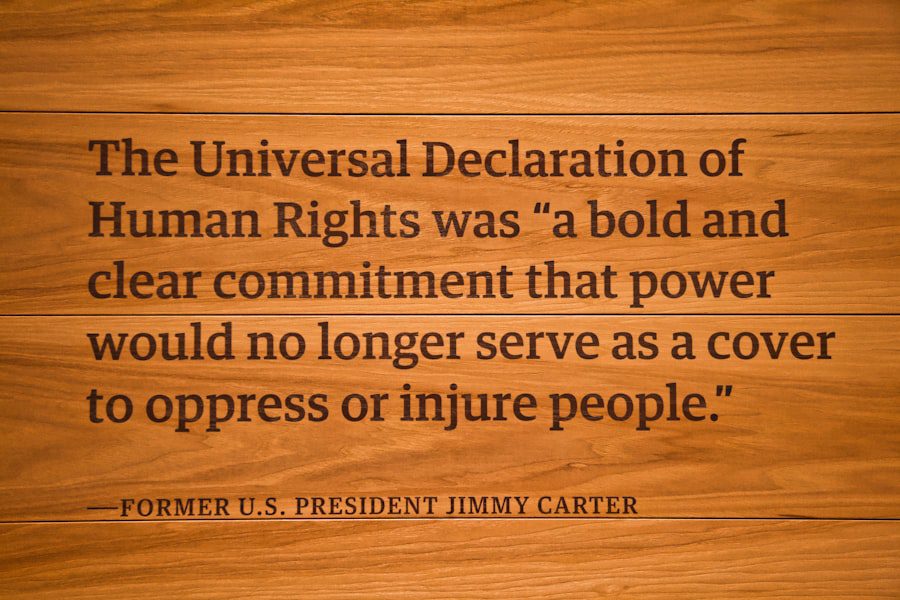
Despite its noble ideals, the Liberty Proclamation has faced significant opposition throughout history. Critics have often argued that absolute liberty can lead to chaos or undermine social cohesion. Some have contended that certain restrictions on individual freedoms are necessary for the greater good or public safety.
This tension between liberty and order is a recurring theme in political discourse, raising important questions about how best to balance these competing interests. Additionally, there are those who resist the proclamation’s call for equality and justice due to entrenched power structures or ideological beliefs. Opponents may fear that embracing the principles of liberty could threaten their status or privilege within society.
This resistance can manifest in various forms, from legislative pushback against civil rights initiatives to social movements aimed at preserving existing hierarchies. Addressing this opposition requires ongoing dialogue and engagement, as well as a commitment to fostering understanding and reconciliation among diverse perspectives.
The Future of Liberty and the Liberty Proclamation
As we look toward the future, the principles enshrined in the Liberty Proclamation remain as relevant as ever. In an increasingly interconnected world, challenges such as authoritarianism, inequality, and social fragmentation threaten the very fabric of liberty itself. However, these challenges also present opportunities for renewed advocacy and action.
The future of liberty hinges on our collective ability to uphold its ideals in the face of adversity. To ensure that the Liberty Proclamation continues to inspire future generations, it is essential to cultivate a culture of engagement and activism. This involves educating individuals about their rights and responsibilities while encouraging them to participate actively in civic life.
By fostering a sense of community and shared purpose, we can work together to create a society where liberty is not just an aspiration but a lived reality for all.
The Call to Action for a Liberty Proclamation
In conclusion, the Liberty Proclamation serves as both a historical milestone and a contemporary call to action. It challenges us to reflect on our values and commitments as individuals and as members of society. As we navigate an increasingly complex world, we must remain steadfast in our dedication to upholding liberty for all people.
This requires not only recognizing our own rights but also advocating for those whose voices may be marginalized or silenced. The call to action is clear: we must engage with one another in meaningful dialogue, seek reconciliation across divides, and work tirelessly toward creating a wise and moral society that prioritizes human flourishing. The principles enshrined in the Liberty Proclamation are not merely aspirational; they are actionable imperatives that demand our attention and commitment.
Let us rise to this challenge together, ensuring that liberty remains a guiding light for generations to come.